Ai Training For Non Technical Marketers · 4 min read
AI training for non-technical marketers focuses on equipping professionals with the skills needed to understand and utilize artificial intelligence effectively in their marketing strategies. This training enables marketers to make data-driven decisions, enhance customer engagement, and optimize campaigns without needing extensive technical knowledge.
In this article, you’ll learn about the best practices for AI training tailored for non-technical marketers, explore successful case studies, and understand how to implement these strategies in your organization. We will cover essential tools and resources, industry insights, and actionable tips to help you thrive in this rapidly evolving digital landscape.
Why AI Training Matters for Marketers
The marketing landscape has evolved significantly with the advent of AI technologies. Today’s marketers face the challenge of leveraging AI tools to analyze consumer data, personalize experiences, and predict market trends. According to a report by McKinsey, companies that integrate AI into their marketing strategies see a 20-30% increase in efficiency. For non-technical marketers, understanding how to apply AI can be the difference between staying relevant and falling behind.
Benefits of AI Training for Non-Technical Marketers
<!– wp:kadence/listitem {"text":"Enhanced Decision-Making: AI tools provide insights that help marketers make informed decisions based on data rather than intuition.”,”icon”:”fe_hash”,”uniqueID”:”_561ed3″} –>
<strong>Enhanced Decision-Making:</strong> AI tools provide insights that help marketers make informed decisions based on data rather than intuition.
<!– wp:kadence/listitem {"text":"Improved Customer Targeting: By understanding AI-driven analytics, marketers can target audiences more effectively and personalize their approaches.”,”icon”:”fe_hash”,”uniqueID”:”_c1e771″} –>
<strong>Improved Customer Targeting:</strong> By understanding AI-driven analytics, marketers can target audiences more effectively and personalize their approaches.
<!– wp:kadence/listitem {"text":"Increased Efficiency: Automating routine tasks allows marketers to focus on strategy and creativity, leading to more innovative campaigns.”,”icon”:”fe_hash”,”uniqueID”:”_a8d255″} –>
<strong>Increased Efficiency:</strong> Automating routine tasks allows marketers to focus on strategy and creativity, leading to more innovative campaigns.
Essential AI Concepts for Marketers
Before diving into training resources, it’s important to grasp fundamental AI concepts relevant to marketing:
<!– wp:kadence/listitem {"text":"Machine Learning (ML): A subset of AI that focuses on algorithms that allow computers to learn from and make predictions based on data.”,”icon”:”fe_chevronRight”,”uniqueID”:”_ce4dec”} –>
<strong>Machine Learning (ML):</strong> A subset of AI that focuses on algorithms that allow computers to learn from and make predictions based on data.
<!– wp:kadence/listitem {"text":"Natural Language Processing (NLP): Enables machines to understand and interpret human language, crucial for chatbots and sentiment analysis.”,”icon”:”fe_chevronRight”,”uniqueID”:”_ad1501″} –>
<strong>Natural Language Processing (NLP):</strong> Enables machines to understand and interpret human language, crucial for chatbots and sentiment analysis.
<!– wp:kadence/listitem {"text":"Predictive Analytics: Uses statistical algorithms and machine learning techniques to identify the likelihood of future outcomes based on historical data.”,”icon”:”fe_chevronRight”,”uniqueID”:”_339e0f”} –>
<strong>Predictive Analytics:</strong> Uses statistical algorithms and machine learning techniques to identify the likelihood of future outcomes based on historical data.
Best Practices for AI Training
To successfully implement AI training for non-technical marketers, consider the following best practices:
1. Identify Learning Objectives
Start by identifying what specific skills or knowledge your marketing team needs. Are they looking to understand data analytics, improve customer engagement, or utilize AI tools for content creation? Clear objectives will guide the training process effectively.
2. Choose the Right Training Format
Non-technical marketers may benefit from various training formats, including:
<!– wp:kadence/listitem {"text":"Online Courses: Platforms like Coursera or Udemy offer courses specifically for marketers.”,”icon”:”fe_chevronRight”,”uniqueID”:”_c0c027″} –>
<strong>Online Courses:</strong> Platforms like Coursera or Udemy offer courses specifically for marketers.
<!– wp:kadence/listitem {"text":"Workshops: In-person or virtual workshops provide hands-on experience with AI tools.”,”icon”:”fe_chevronRight”,”uniqueID”:”_4a7a4f”} –>
<strong>Workshops:</strong> In-person or virtual workshops provide hands-on experience with AI tools.
<!– wp:kadence/listitem {"text":"Webinars: Short sessions focusing on specific AI applications in marketing.”,”icon”:”fe_chevronRight”,”uniqueID”:”_9f453b”} –>
<strong>Webinars:</strong> Short sessions focusing on specific AI applications in marketing.
[INTERNAL LINK: online AI courses for marketers]
3. Leverage Case Studies
Real-world examples of AI applications in marketing help bridge the gap between theory and practice. Case studies can illustrate how companies like Coca-Cola utilize AI for customer engagement and how Netflix leverages predictive analytics for content recommendations.
Successful Case Studies
Case Study 1: Coca-Cola’s AI-Driven Marketing
Coca-Cola implemented AI technology to analyze social media data, gaining insights into consumer preferences. By using machine learning algorithms, they were able to tailor their marketing strategies based on real-time feedback, resulting in a 15% increase in customer engagement.
Case Study 2: Netflix’s Personalization Strategy
Netflix employs AI to analyze viewing patterns and deliver personalized content recommendations. This strategy has led to a 75% increase in viewer retention, showcasing how AI can enhance customer satisfaction and loyalty.
Recommended AI Tools for Non-Technical Marketers
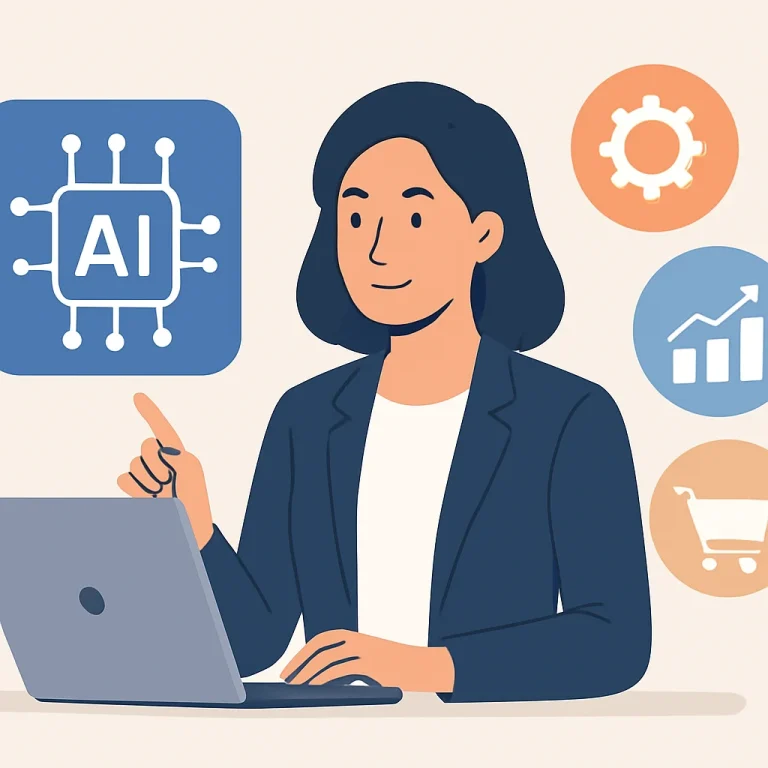
Familiarity with specific AI tools can enhance marketers’ capabilities. Here are some popular tools:
<!– wp:kadence/listitem {"text":"HubSpot: Offers AI-driven marketing automation features that simplify campaign management.”,”icon”:”fe_chevronRight”,”uniqueID”:”_f159c8″} –>
<strong>HubSpot:</strong> Offers AI-driven marketing automation features that simplify campaign management.
<!– wp:kadence/listitem {"text":"Canva: Uses AI to suggest design layouts and elements, making content creation accessible.”,”icon”:”fe_chevronRight”,”uniqueID”:”_afbfd9″} –>
<strong>Canva:</strong> Uses AI to suggest design layouts and elements, making content creation accessible.
<!– wp:kadence/listitem {"text":"Google Analytics: Incorporates AI to provide insights into user behavior and campaign performance.”,”icon”:”fe_chevronRight”,”uniqueID”:”_39727d”} –>
<strong>Google Analytics:</strong> Incorporates AI to provide insights into user behavior and campaign performance.
[IMAGE: AI tools for marketers + alt text: "AI tools like HubSpot and Canva streamline marketing efforts"]
Building a Culture of Continuous Learning
Encouraging a culture of continuous learning within your marketing team is essential. Promote regular discussions on AI trends, attend conferences, and invest in ongoing training. This not only enhances skills but fosters a collaborative environment where team members can share insights and strategies.
Engaging with Experts and Communities
Engaging with AI experts and joining marketing communities can provide valuable insights. Platforms like LinkedIn, Twitter, and specialized forums can connect marketers with thought leaders and peers in the industry.
Overcoming Common Challenges
While implementing AI training, marketers may face several challenges:
<!– wp:kadence/listitem {"text":"Resistance to Change: Some team members may be hesitant to adopt new technologies. Address concerns through clear communication about the benefits of AI.”,”icon”:”fe_chevronRight”,”uniqueID”:”_cf7a81″} –>
<strong>Resistance to Change:</strong> Some team members may be hesitant to adopt new technologies. Address concerns through clear communication about the benefits of AI.
<!– wp:kadence/listitem {"text":"Skill Gaps: Non-technical marketers may struggle with technical jargon. Provide clear definitions and context to ease their understanding.”,”icon”:”fe_chevronRight”,”uniqueID”:”_86a76d”} –>
<strong>Skill Gaps:</strong> Non-technical marketers may struggle with technical jargon. Provide clear definitions and context to ease their understanding.
<!– wp:kadence/listitem {"text":"Resource Constraints: Limited budgets can hinder training opportunities. Explore free or low-cost resources to maximize learning without overspending.”,”icon”:”fe_chevronRight”,”uniqueID”:”_36647e”} –>
<strong>Resource Constraints:</strong> Limited budgets can hinder training opportunities. Explore free or low-cost resources to maximize learning without overspending.
The Future of AI in Marketing
The future of AI in marketing looks promising. As technology evolves, marketers must stay informed about new tools and trends to maintain a competitive edge. Continuous training and adaptation will be critical for success.
As an example, AI-powered chatbots are becoming increasingly sophisticated, providing real-time customer support and enhancing user experience. Marketers should consider integrating such tools into their strategies to improve engagement and efficiency.
Conclusion
AI training for non-technical marketers is not just an option; it’s a necessity in today’s digital marketing landscape. By focusing on the best practices outlined above and engaging with real-world case studies, marketers can confidently embrace AI technologies. This training will empower them to make data-driven decisions, enhance customer engagement, and ultimately drive business success.
Key Takeaways
AI training enhances marketing decision-making.
Real-world case studies illustrate AI's impact.
Continuous learning fosters a competitive edge.
Frequently Asked Questions
Marketers should understand machine learning, natural language processing, and predictive analytics to effectively leverage AI tools in their strategies.
Tools like HubSpot for marketing automation, Canva for design, and Google Analytics for performance insights are great for non-technical marketers.
Marketers can connect with AI experts through platforms like LinkedIn, Twitter, and industry-specific forums to gain insights and knowledge.
Common challenges include resistance to change, skill gaps, and resource constraints, all of which can be addressed with clear communication and the use of accessible learning resources.
Ready to elevate your marketing skills with AI? Explore our comprehensive training resources tailored for non-technical marketers and start transforming your strategies today!
Enjoy our AI education and solutions in Asia tips? Subscribe for more!
AI Marketing Course Singapore Ai Marketing Course Singapore · 3 min read AI marketing courses in Singapore offer a wealth of knowledge and skills essential for navigating today’s digital landscape. These courses equip individuals and organizations with cutting-edge marketing strategies powered by artificial intelligence, enhancing decision-making and driving business growth. In this article, you’ll learn…
Certified Generative AI in Business Certified Generative AI in Business · 4 min read Certified Generative AI in Business is crucial for professionals aiming to enhance their expertise and drive innovation in various industries. Certification not only validates skills but also equips individuals with the knowledge required to implement generative AI solutions effectively. This article…
AI Training For Non Technical Marketers Ai Training For Non Technical Marketers · 4 min read AI training for non-technical marketers is essential for understanding how artificial intelligence can elevate marketing strategies. This article outlines tailored approaches for different industries, providing insights into effective training methods and resources available to enhance your skills in AI….
Certified Generative AI in Business: A Guide for Supply Chain Experts Certified Generative AI in Business · 4 min read Certified Generative AI in Business is essential for supply chain professionals in Asia. This technology enhances decision-making, optimizes operations, and drives innovation. In this article, you’ll discover how Generative AI can revolutionize supply chains, the…